
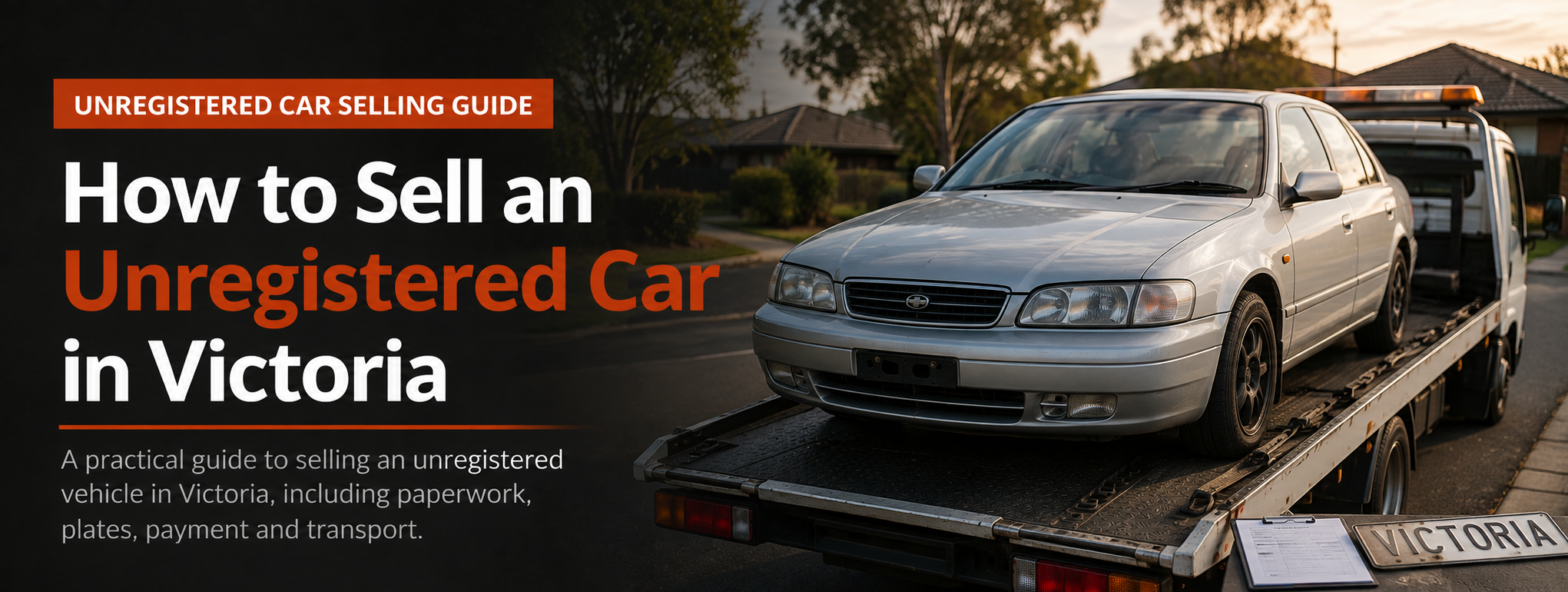
Yes, you can sell an unregistered car in Victoria. Because the vehicle is already unregistered, there is no active registration to transfer through VicRoads. However, you should still prepare a clear receipt, remove any number plates before handover and arrange lawful transport for the vehicle.
An unregistered vehicle cannot normally be driven on Victorian public roads unless it is registered, covered by a valid Unregistered Vehicle Permit (UVP), or otherwise legally exempt. If the car is damaged, unsafe or non-running, vehicle collection or towing may be the more practical option.
If you want to sell an unwanted unregistered vehicle directly, you can also learn more about WreckPay's cash for unregistered cars Melbourne service or request a vehicle quote.
Can You Legally Sell an Unregistered Car in Victoria?
Yes. VicRoads guidance for unregistered vehicles states that an unregistered car, truck, motorcycle, caravan or trailer can be bought in Victoria without VicRoads being informed.
Because the vehicle is not registered, there is no current registration to transfer to the buyer. This does not mean the transaction should be informal. Both parties should keep a clear record of the sale showing the vehicle details, seller, buyer, price and exact time of handover.
The buyer will need to meet the relevant registration requirements before the vehicle can be used normally on Victorian roads.
Do You Need a Roadworthy Certificate?
Not when the vehicle is already unregistered or its registration has been cancelled. Consumer Affairs Victoria's unregistered vehicle guidance explains that an unregistered or cancelled vehicle can be sold without a Certificate of Roadworthiness.
This differs from the usual private sale of a registered vehicle, where a current roadworthy certificate is generally required.
If the buyer wants to put the vehicle back on the road, they will generally need to arrange the roadworthy certificate, registration and registration plates. Make the unregistered status clear in the advertisement, quote and receipt so there is no confusion about what is included in the sale.
Important: Selling a vehicle "as is" does not make a misleading description acceptable. Disclose known faults honestly and do not describe a vehicle as roadworthy unless you have reliable evidence.
What to Prepare Before You Ask for an Offer
A buyer can assess the vehicle more efficiently when you have the important details ready. Before contacting WreckPay or listing the vehicle privately, collect:
- Vehicle make, model and year of manufacture
- VIN or chassis number
- Odometer reading and transmission type
- Registration status and, if known, the date the registration expired or was cancelled
- Condition details, including accident damage, missing parts, mechanical faults, fire or flood exposure
- Whether the vehicle starts, rolls, steers and brakes
- Clear photos of the exterior, interior, wheels, engine bay and damaged areas
- Pickup suburb and access conditions, such as a driveway, garage, basement or roadside location
- Proof that you are entitled to sell the vehicle and suitable identification for the transaction
Do not remove, alter or obscure the VIN or chassis number. Victorian scrap-metal rules restrict dealings in unidentified vehicles, and legitimate vehicle buyers may need vehicle and seller identification for their records.
Before Handover
Prepare the Car for a Clear, Documented Sale
Before the buyer arrives, make sure the vehicle details, ownership records and collection arrangements are ready. This can reduce delays and help both parties understand exactly what is being sold.
- Remove personal belongings, toll tags and connected-app access
- Keep the VIN or chassis number visible and unchanged
- Have identification and proof that you are entitled to sell the vehicle
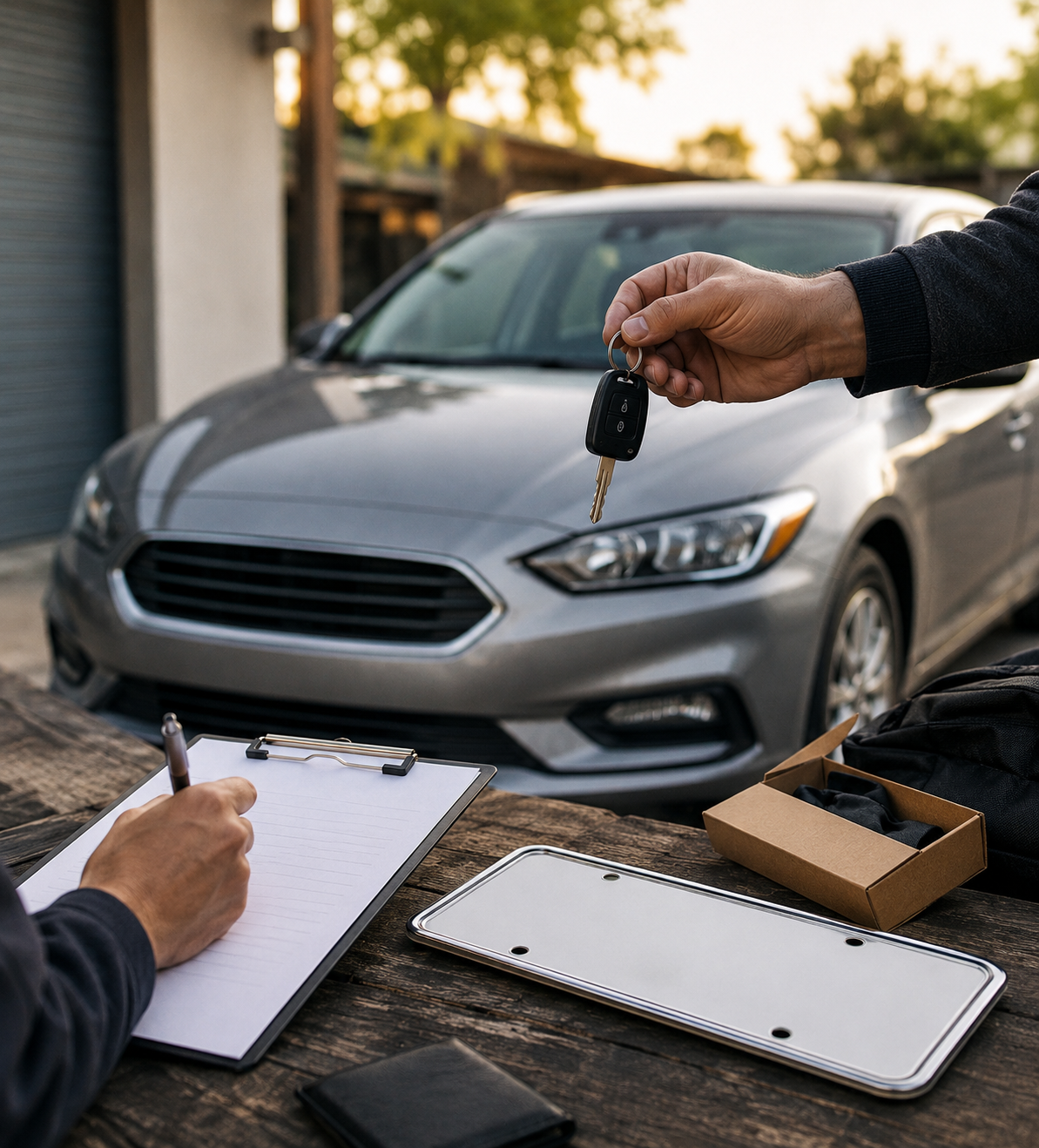
- Remove number plates before the vehicle changes hands
- Confirm how the vehicle will be transported from the pickup location
- Prepare a written receipt before collection
How to Sell an Unregistered Car in Victoria: Step by Step
1. Check the Registration Status
Confirm whether the vehicle is expired, cancelled, suspended or still registered. If the registration is still active and the vehicle is being disposed of, check the appropriate VicRoads process before proceeding.
2. Remove the Number Plates
Remove any attached number plates before an unregistered vehicle changes hands. Follow VicRoads instructions for returning or disposing of standard plates. Custom or personalised plates may require separate retention or transfer arrangements.
3. Choose the Right Sale Route
A private sale may suit a complete, repairable vehicle with strong buyer demand. A vehicle buyer, recycler or wrecker may be more practical for a non-running, badly damaged, incomplete or low-value vehicle, particularly when collection is required.
Consumer Affairs Victoria provides guidance about licensing requirements for auto wreckers and recyclers. The licence or registration needed can depend on the vehicle and how it is being acquired.
4. Request and Compare Written Offers
Give each buyer the same accurate vehicle details. Ask whether vehicle collection is included, how the final value is confirmed, which documents are required, whether deductions can occur at collection and how payment will be made.
The highest headline offer is not necessarily the best overall result if separate removal costs or unexpected deductions apply.
5. Confirm the Collection or Transport Plan
An unregistered vehicle cannot simply be driven away on public roads. Arrange towing, a suitable trailer or another lawful transport method.
If an otherwise suitable vehicle needs to be driven for an eligible one-off purpose, check VicRoads Unregistered Vehicle Permit guidance before anyone drives it.
6. Complete Payment and the Receipt Before Releasing the Vehicle
Confirm cleared or verifiable payment and prepare a signed receipt for both parties. Consumer Affairs Victoria advises sellers not to transfer ownership before payment has been received.
If the vehicle is being acquired as scrap for recycling or reprocessing, Victorian scrap-metal laws prohibit cash payment. Consumer Affairs Victoria's scrap metal guidance explains the applicable payment and record-keeping rules.
7. Finish the Handover
Remove personal belongings, toll tags and access to any connected vehicle apps. Give the buyer only the keys and documents agreed in the sale. Keep the receipt, quote, payment record and any pickup photographs together for your records.
What Should the Receipt Include?
VicRoads recommends keeping a receipt as proof of purchase and ownership. A useful receipt should include:
- Date and exact time of sale
- Agreed sale price and payment method
- Seller's full name, address and signature
- Buyer's or business's full name, address and signature
- Vehicle make, model, year, colour and odometer reading
- VIN or chassis number
- A statement that the vehicle is being sold unregistered
- A note that number plates and a roadworthy certificate are not included, where applicable
- Any included keys, accessories or parts
- Known major faults disclosed at the time of sale
You may also record that the buyer understands the vehicle must not be driven on public roads unless it is registered, covered by a valid permit or otherwise legally exempt.
Can the Buyer Drive the Car Away?
Usually not without the appropriate authority. VicRoads states that an unregistered vehicle cannot be driven on the road unless an Unregistered Vehicle Permit applies or the vehicle is exempt from registration.
A UVP is intended for limited circumstances and is not a replacement for normal vehicle registration. The vehicle must also be suitable for the permitted journey.
For damaged, unsafe or non-running vehicles, professional collection is generally the simpler option. Agree in writing who is arranging transport and whether its cost is included in the offer. WreckPay's car removal Melbourne page explains the vehicle collection service available in Melbourne.
Private Sale or Vehicle Recycler: Which Is Better?
A private sale may make sense when the vehicle is complete, repairable, desirable and worth the time required to advertise it, answer enquiries, arrange inspections and negotiate transport.
A vehicle buyer or recycler may be more practical when the car does not run, is accident-damaged, has major mechanical faults, is incomplete or would cost more to prepare for sale than you are likely to recover.
Before accepting an offer, verify the business identity, any licence or registration relevant to the transaction, payment method, collection terms and paperwork. Do not rely only on an advertisement or unusually high headline offer.
Common Mistakes to Avoid
- Leaving the plates attached: remove number plates before an unregistered vehicle changes hands.
- Letting someone drive away unlawfully: agree on legal transport or check UVP eligibility before pickup.
- Handing over the vehicle before payment is verified: complete payment and paperwork first.
- Using a vague receipt: include the VIN, both parties' details, sale time, price and unregistered status.
- Hiding known faults: accurate disclosure can reduce disputes and help the buyer assess the vehicle correctly.
- Accepting physical cash where the vehicle is bought as scrap: Victorian scrap-metal transactions are subject to specific payment rules.
- Ignoring finance or security interests: if money is still owing, contact the lender and resolve the payout process before sale.
Common Questions
Frequently Asked Questions
These answers summarise the main points to check when selling an unregistered vehicle in Victoria. Requirements can change, so confirm current guidance before completing the sale.
Do I have to tell VicRoads that I sold an unregistered car?
VicRoads states that it does not need to be informed when an unregistered vehicle is bought in Victoria. Keep a complete signed receipt because the vehicle register itself is not proof of legal ownership.
Can I sell an unregistered car without a roadworthy certificate?
Yes. Consumer Affairs Victoria states that an unregistered or cancelled vehicle can be sold without a roadworthy certificate. The buyer will need to meet the relevant requirements if they want to register and use the vehicle on the road.
What happens to the old number plates?
Remove them before the sale and follow VicRoads instructions for returning or disposing of the plates. Personalised or custom plates may need a separate retention or transfer process.
Can I sell a car that does not run?
Yes, provided you are entitled to sell it and describe its condition accurately. The main practical issue is transport, so arrange a buyer with suitable collection equipment or organise lawful towing.
Can I receive cash for an unregistered scrap car in Victoria?
If the vehicle is bought as scrap for recycling or reprocessing, Consumer Affairs Victoria states that cash payments are prohibited. The rules may differ where a vehicle is acquired for dismantling and parts rather than as scrap metal, so the buyer should clearly document the basis of the transaction and payment method.
Do I need a PPSR check to sell my car?
A PPSR search is mainly a buyer-protection step, but a seller can also use one to identify a registered security interest that may affect the sale. The official PPSR used car and vehicle search uses the VIN or chassis number. The online self-service search is currently listed at $2.
Sell Your Unregistered Car Without the Guesswork
Selling an unregistered car in Victoria can be straightforward when the plates, paperwork, payment and transport are handled in the right order. Start with accurate vehicle details, compare the complete offer rather than only the headline amount, and keep a signed record of the handover.
Ready for an offer? Contact WreckPay with your vehicle's make, model, year, condition and Melbourne pickup suburb. You can also review our cash for unregistered cars Melbourne service before getting started.
Official References
Victorian requirements and fees can change. Check the current official guidance before completing a transaction.
- VicRoads — Buy an unregistered vehicle
- VicRoads — Unregistered Vehicle Permits
- Consumer Affairs Victoria — Unregistered vehicles
- Consumer Affairs Victoria — Selling a car
- Consumer Affairs Victoria — Scrap metal laws
- Consumer Affairs Victoria — Auto wreckers and recyclers
- PPSR — Do a used car or vehicle search
This article provides general information only and should not be treated as legal advice.